


Prevent Tax…
IVPHUB helps…

Monitor Assets Across Every Stage with Precision Driven Lifecycle Management
April 23, 2026
Unverified Work Hours Fade with Controlled Timesheet Management Systems
May 1, 2026Monitor Assets Across Every Stage with Precision Driven Lifecycle Management
April 23, 2026Unverified Work Hours Fade with Controlled Timesheet Management Systems
May 1, 2026
Performance management starts with good intent but quickly turns into a time-consuming administrative cycle. HR teams end up buried in spreadsheets, managers struggle to complete reviews on time, and employees wait weeks for feedback that should take days.
These ongoing performance management challenges often reduce the effectiveness of HR teams and delay critical decisions.
The real issue is not performance management itself. The challenge is how it is managed.
When processes depend heavily on manual effort, performance management shifts from a growth tool into an operational burden. This is where smart automation changes the equation completely. It removes repetitive tasks, improves speed, and allows HR teams to focus on people not paperwork.
Administrative burden refers to all the repetitive tasks that consume HR time without directly improving employee performance outcomes.
In traditional systems, this burden includes:
Many of these performance management challenges increase as organizations scale, making manual systems unsustainable.
These tasks may appear routine, but together they create a significant operational load. As organizations grow, this manual dependency slows decision-making and reduces efficiency.
Modern organizations are shifting toward modern performance management systems that rely on automation and data-driven workflows.
This is where performance management reduces administrative burden with smart automation by redesigning how tasks are handled.
Instead of manual tracking and coordination, automation brings structure, speed, and consistency into the process.
One of the biggest improvements comes from removing manual data handling.
With automation:
This improves performance management efficiency and reduces dependency on manual processes. HR teams no longer chase data they analyse it.
Traditional review cycles depend on reminders, follow-ups, and manual coordination. This often leads to delays and incomplete evaluations.
Smart automation helps streamline performance reviews by reducing manual intervention:
This is where automated performance reviews significantly reduce HR workload while improving consistency.
The outcome is faster and more reliable review cycles.
One major limitation of traditional systems is that feedback happens too late. Annual or quarterly reviews often fail to reflect real-time performance.
Automation introduces continuous feedback:
This is supported by real time performance tracking, which ensures feedback stays relevant and timely.
Employees no longer wait months to understand where they stand.

A large portion of HR workload comes from coordination reminding managers, collecting inputs, and tracking approvals.
HR Automation removes this dependency by enabling self-service workflows:
This reduces communication delays and eliminates unnecessary follow-ups.
HR becomes a strategic partner instead of a process coordinator.
Reporting is one of the most time-consuming parts of performance management.
Without automation:
With automation:
This shift improves both speed and accuracy in decision-making.
Before Automation
After Automation
This transformation is driven by modern performance management systems designed for efficiency.
Modern systems are designed to eliminate administrative friction.
Core features include:
These features significantly improve performance management efficiency.
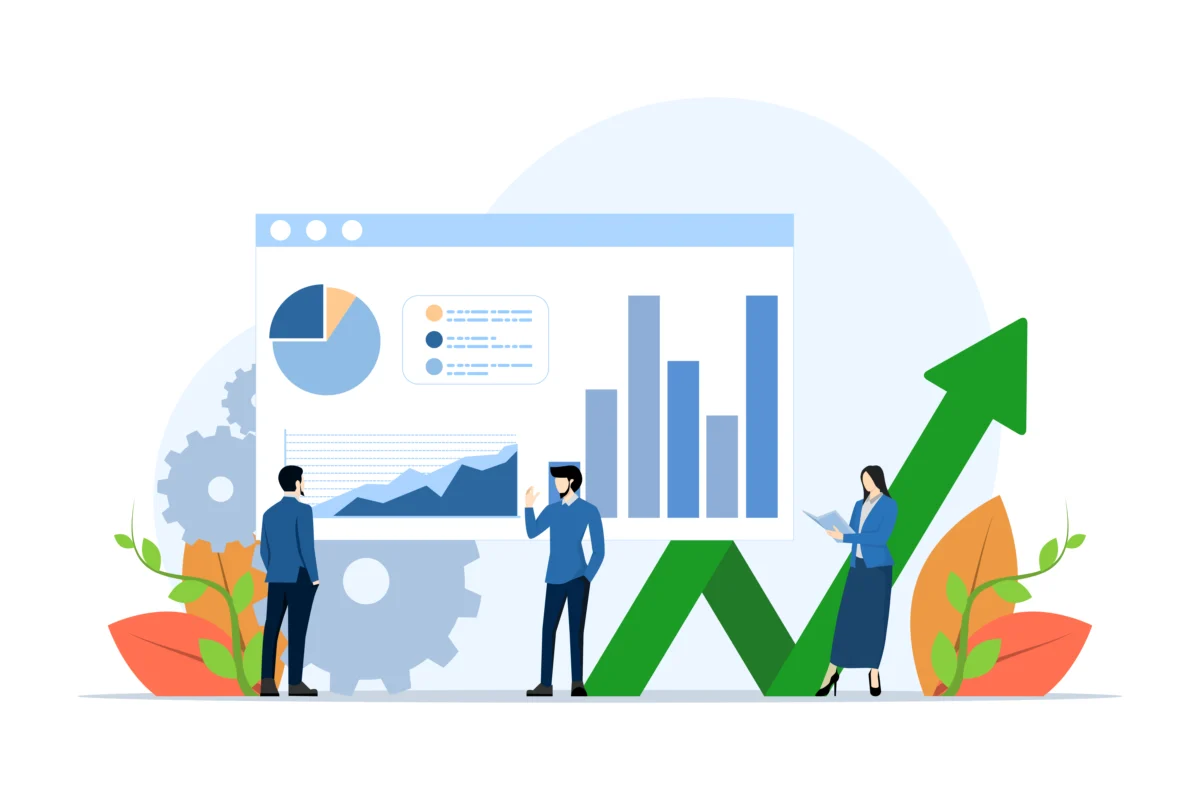
While reducing workload is important, the real value goes much further.
Organizations experience:
Performance management becomes a continuous improvement system rather than an annual exercise.
Even with clear benefits, transitioning to automation comes with challenges:
These challenges are manageable with proper planning and adoption strategies.
To ensure successful adoption:
Organizations that streamline performance reviews early see faster adoption and better outcomes.
IVPHUB helps organizations overcome the everyday inefficiencies of performance management by combining automation, real-time insights, and user-friendly workflows into a single platform. Instead of relying on manual tracking, disconnected tools, and delayed feedback cycles, IVPHUB simplifies the entire performance process from goal setting to evaluation and reporting.
IVPHUB centralizes all performance data in one system, removing the need for spreadsheets and duplicate entries. This ensures data accuracy and saves time spent on repetitive updates.
With built-in automation, IVPHUB schedules review cycles, sends reminders, and provides structured templates. This ensures reviews are completed on time without constant follow-ups.
The platform supports ongoing feedback between managers and employees, making performance discussions timely and relevant instead of delayed and infrequent.
IVPHUB introduces self-service workflows where employees and managers can update goals, track progress, and complete evaluations without HR intervention.
With dynamic dashboards and instant reporting, IVPHUB gives leadership clear visibility into team performance, enabling faster and more informed decisions.
By automating repetitive tasks and streamlining workflows, IVPHUB significantly reduces administrative burden while improving consistency and accuracy across performance management processes.
Performance management is moving toward intelligent, predictive systems.
Future systems will:
This evolution will continue to reduce manual effort and improve strategic decision-making.
When performance management reduces administrative burden with smart automation, organizations unlock new levels of efficiency.
Manual processes are replaced with intelligent workflows powered by modern performance management systems.
Ready to move beyond manual performance management and improve efficiency across your teams? Connect with us today fill out the form and let’s help you streamline your performance workflows.
The result is a system that supports growth, improves engagement, and delivers faster, more accurate decisions without the administrative overload.
Manual data entry, scattered tools, and delayed feedback cycles create inefficiencies that consume HR time without improving outcomes.
Automation removes repetitive tasks like tracking reviews and generating reports, allowing HR teams to focus on strategic decisions.
They rely on manual coordination, delayed feedback, and inconsistent data, which slows decision-making and reduces accuracy.
It uses technology to automate workflows, track performance in real time, and deliver insights without manual intervention.
They standardize evaluation criteria and reduce human error, ensuring consistent and data-driven performance assessments.
It provides instant visibility into employee progress, helping managers address issues early instead of waiting for review cycles.
Continuous feedback and transparency make employees more aware of their performance, increasing motivation and accountability.
Automation handles repetitive tasks, but HR remains essential for decision-making, strategy, and employee development.
They provide real-time insights, simplify reporting, and help leaders make faster, data-backed decisions.
By defining clear goals, training users properly, and implementing systems gradually to ensure smooth adoption and usage.